Fire-retardant housings: what the 850 °C glow-wire test means
An emergency luminaire has to keep working in the conditions that caused the emergency. That is why its housing is tested against ignition more severely than a general lighting fitting.
The test
A loop of wire is heated to a set temperature and pressed against the plastic part for 30 seconds. The part passes if it does not ignite, or if any flame goes out within 30 seconds of removing the wire and burning drops do not ignite tissue paper placed below.
Why 850 °C
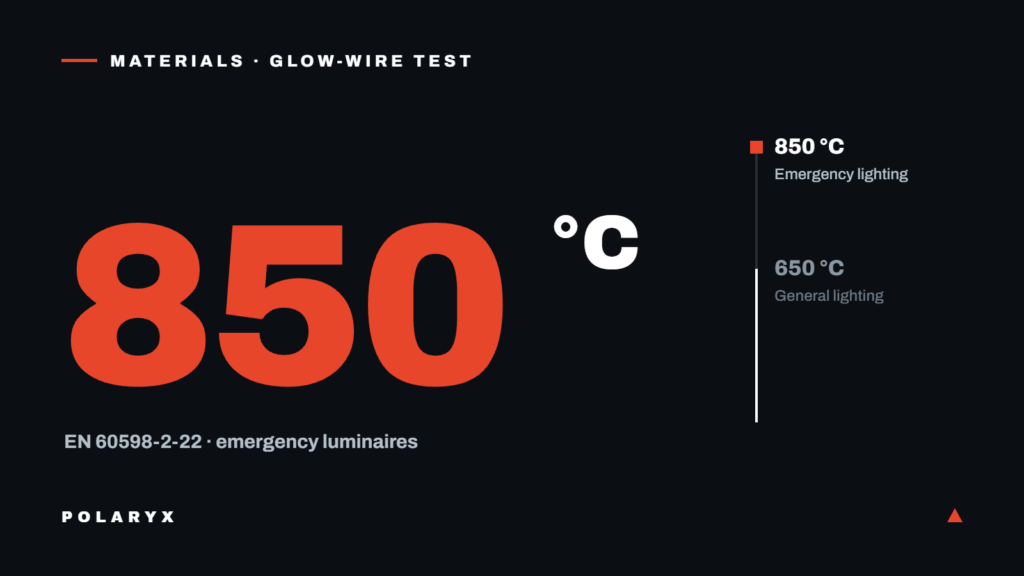
General luminaires are commonly tested at 650 °C. EN 60598-2-22, the product standard for emergency lighting, raises the requirement to 850 °C for the parts that matter. The higher figure reflects the fact that the unit is expected to be near a fire source while it is still operating.
What it means in practice
A housing that passes at 850 °C does not make the luminaire fireproof. It means the enclosure will not add to the fire load or drip burning material onto an escape route, and that the fitting has a better chance of staying in place and lit for its rated duration.
Polaryx housings
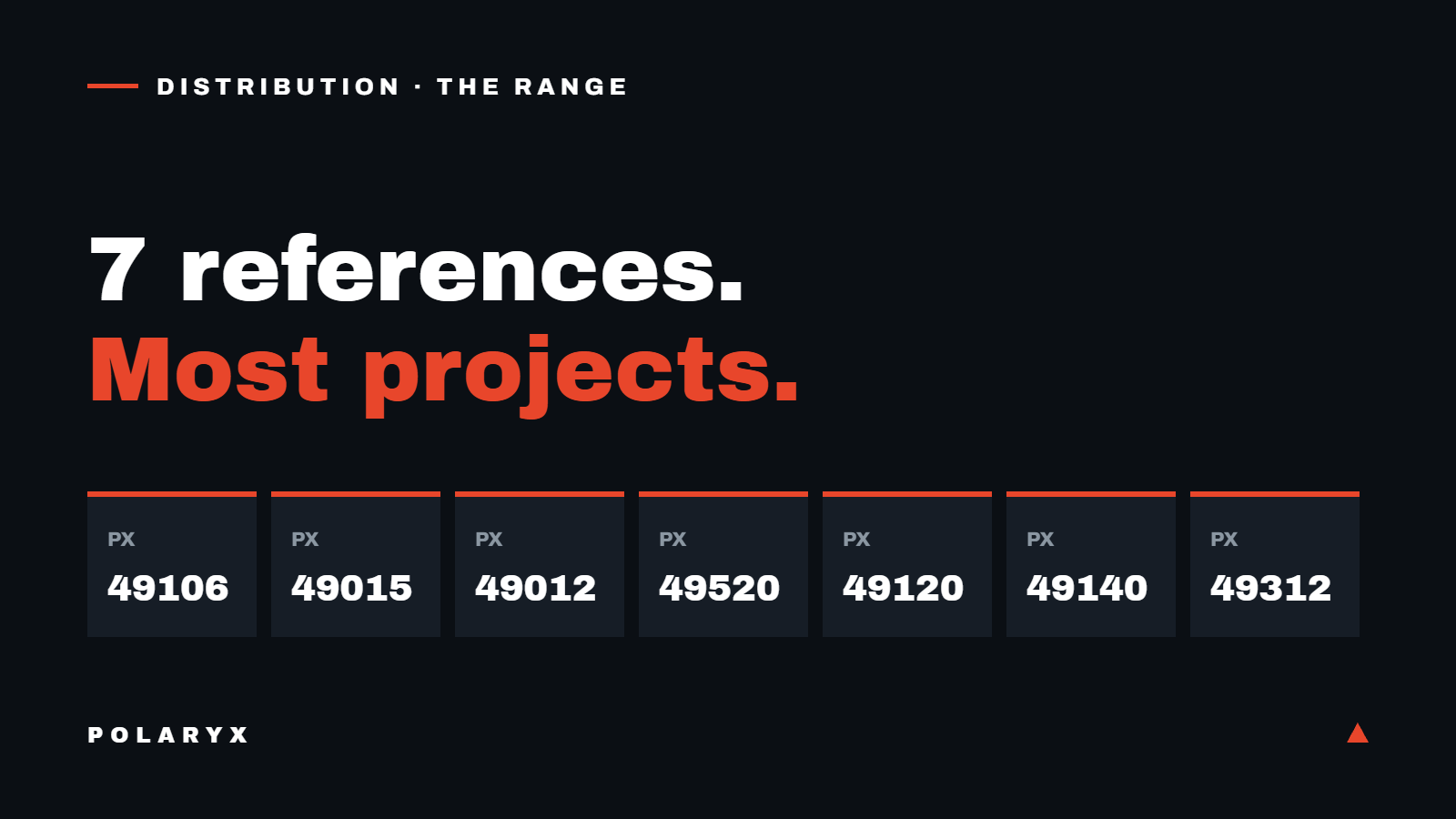
All seven references use fire-retardant polycarbonate or ABS housings and diffusers. The material and test details are listed on each datasheet in the downloads section.